
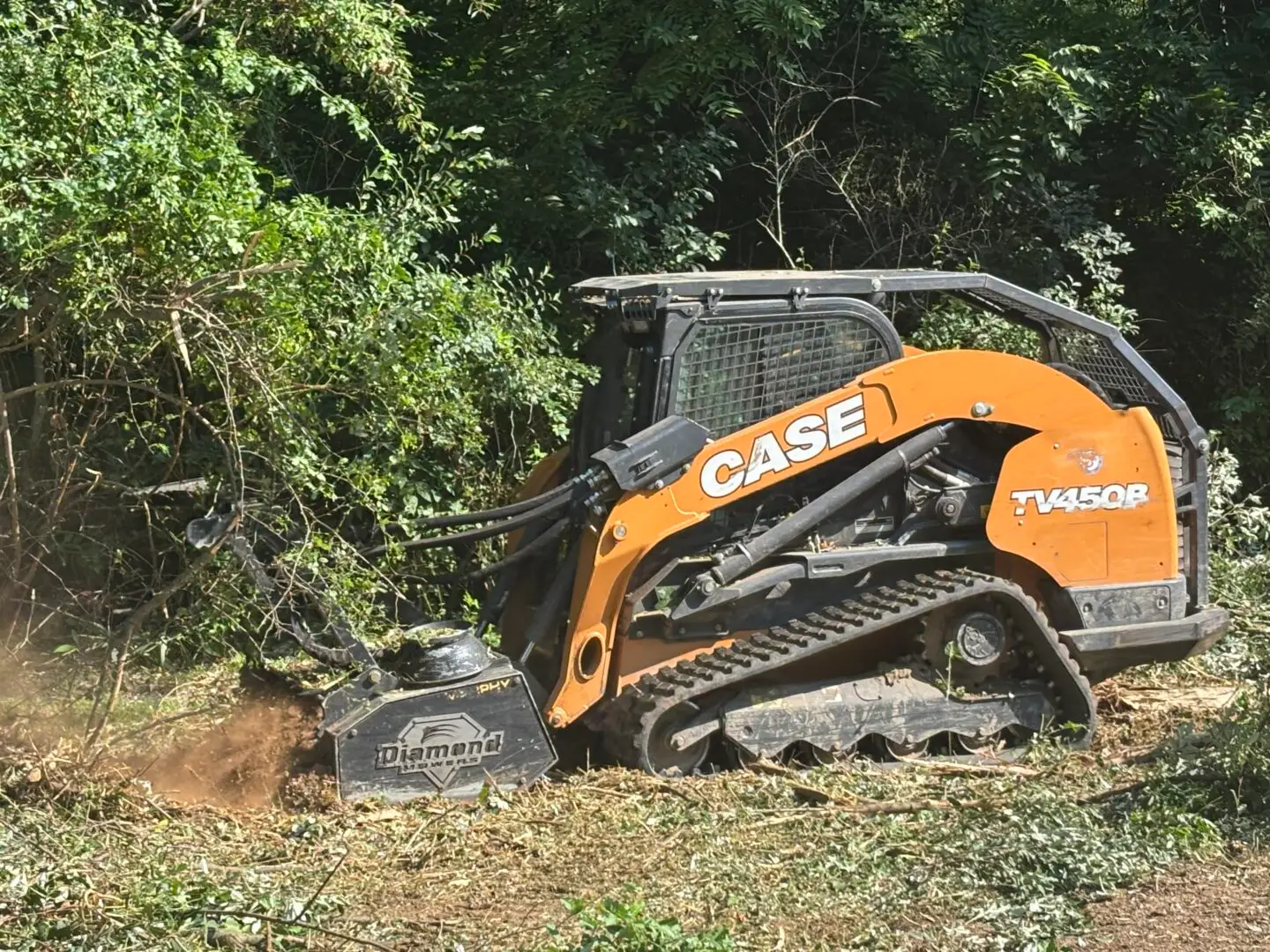
A tree stump sitting in the middle of your yard is the kind of thing that nags at you every time you mow around it. It eats lawn equipment, it sprouts suckers every spring, it attracts carpenter ants and wood-boring insects, and it makes the rest of the yard look unfinished no matter how well you maintain everything else. Stump grinding removes it below grade in a single visit — ground down, cleaned up, and ready for grass seed, landscaping, or a new use of the space. Cornelius Forestry and Land Management serves residential properties, farms, and rural acreage throughout the Goshen, OH area and the surrounding 60-mile region. Call (513) 403-6237 for a free estimate.
What Stump Grinding Actually Involves
Stump grinding is the process of mechanically shredding a tree stump below ground level using a stump grinder — a machine fitted with a rotating steel wheel packed with carbide-tipped cutting teeth. The operator sweeps the cutting head back and forth across the stump face in overlapping horizontal passes, each pass removing a layer of wood until the stump is ground down to the target depth. For most residential applications, we grind 6–8 inches below grade — enough to re-seed the area and restore a level lawn surface. For stumps in areas that will be graded, paved, or built on, we go deeper. Before the grinder starts, we inspect the stump and root flare for buried rocks and debris that would damage the cutting teeth, mark underground utilities with 811, and confirm the end use of the space so we grind to the right depth. The wood chip material left behind can be raked into the void as organic fill, used as mulch elsewhere on the property, or removed — your call. Hardwood stumps common to southwestern Ohio — oak, ash, black walnut, maple — are significantly denser than softwood and take more time to grind, which is why stump diameter and species both factor into pricing.
Our Stump Grinding Process
Step 1 — Stump Assessment
We evaluate each stump: diameter at ground level, species (density matters for grinding time), surface root spread, proximity to structures, irrigation lines, or underground utilities, and access for the grinder. Stumps in fenced areas, tight side yards, or on slopes require different equipment positioning than open-yard stumps. We confirm the depth you need based on what you’re doing with the area after grinding.
Step 2 — Utility Check and Safety Prep
We always call Ohio 811 before any stump grinding work. Underground utilities — gas, electric, cable, water — can run close to root zones, particularly on older rural properties where utility runs aren’t always clearly documented. The area around the stump is cleared of surface rocks and debris that could be ejected by the cutting wheel. Safety deflectors are positioned to contain chip material.
Step 3 — Grinding Below Grade
The grinder’s cutting wheel works across the stump in overlapping passes, reducing wood from the outside edge toward center and from the top surface downward. Hardwood stumps like the mature oaks and ashes common around Goshen and Milford require more passes than softwood species. We grind until the stump is fully below grade — no visible wood above ground level, no raised edge to catch a mower blade.
Step 4 — Chip Management and Fill
After grinding, the area contains a mix of wood chips and disturbed soil. We rake chips into the void created by the grinding process to fill and level the area. If the space will be re-seeded, the chips can stay mixed with topsoil as organic fill. If you have plans that require the area to be completely clear of wood debris, we can haul chips away. We discuss this during the estimate so there’s no surprises at cleanup.
Step 5 — Final Review
We walk the finished area with you. The stump is gone, the void is filled and level, and the space is ready for its next use. Most residential stumps go from visible obstruction to ready-to-seed in a single visit. Multi-stump properties — common on rural lots that had windstorm damage or an overgrown fencerow cleaned up — are priced as a set once the grinder is on site, which brings the per-stump cost down significantly.
Serving the Goshen, OH Area
We grind stumps throughout Clermont, Warren, Hamilton, and surrounding counties — Goshen, Milford, Batavia, Amelia, Loveland, Williamsburg, Bethel, New Richmond, Lebanon, Morrow, Mason, and the rural properties and farm lots in between. Properties with multiple stumps — post-storm cleanup, old orchard removal, fence line clearing — often qualify for better per-stump rates once the machine is on your property. Visit our home page for our full range of land management services.
Why Choose Cornelius Forestry and Land Management
CFLM is a family-run operation — Rob and his son Gavin — built on heavy equipment experience and a commitment to doing the work properly. We provide free on-site estimates, quote before we start, and leave the property clean. Read more about us on our About Us page. For properties that need both land clearing and stump grinding, see our Land Clearing page.